
Intelligence, Alive & Artificial: A Cosmic Manual. The 1st Part: Earth's Smartest Sapien
Superlearning vs. AI: The Spiritual & Practical Guide to Understanding Intelligence from a Cosmic Perspective. Let's answer, once and for all, WHAT IS INTELLIGENCE and HOW DO I GET SUPER-INTELLIGENT?

      Sapere aude! Dare to use your own understanding!
Immanuel Kant, What is Enlightenment? A young man now leaving school possesses more
real knowledge than the greatest geniuses—not
of antiquity, but even of the seventeenth century
—could have acquired after long study.
Marquis de Condorcet, 1794 The will to knowledge, which drove the rise of
modern science, ushered in the world we live in
today. It has brought us many blessings—far
more than we tend to be grateful for—as has the
principle of reason, which has freed us from many
gross superstitions and age-old bondages. Yet
knowledge and truth will always remain
precarious ideals, for they dispel illusions that in
the past made life meaningful—hence bearable.
We pursue truth at the risk of our own happiness.
Robert Harrison, Interminable Ignorance Why is it that we’ve become so much better at things
like engineering and physics, but not economics?
Kyle Scanlon, In this Economy People! Keep on learning!
Stevie Wonder, Higher GroundI: Earth’s Smartest Sapien
.1 John Henry Steel-Thinking Man vs. AI Steam Machine
Hammer gonna be the death of me, lord, lord!
Hammer gonna be the death of me, lord, lord!
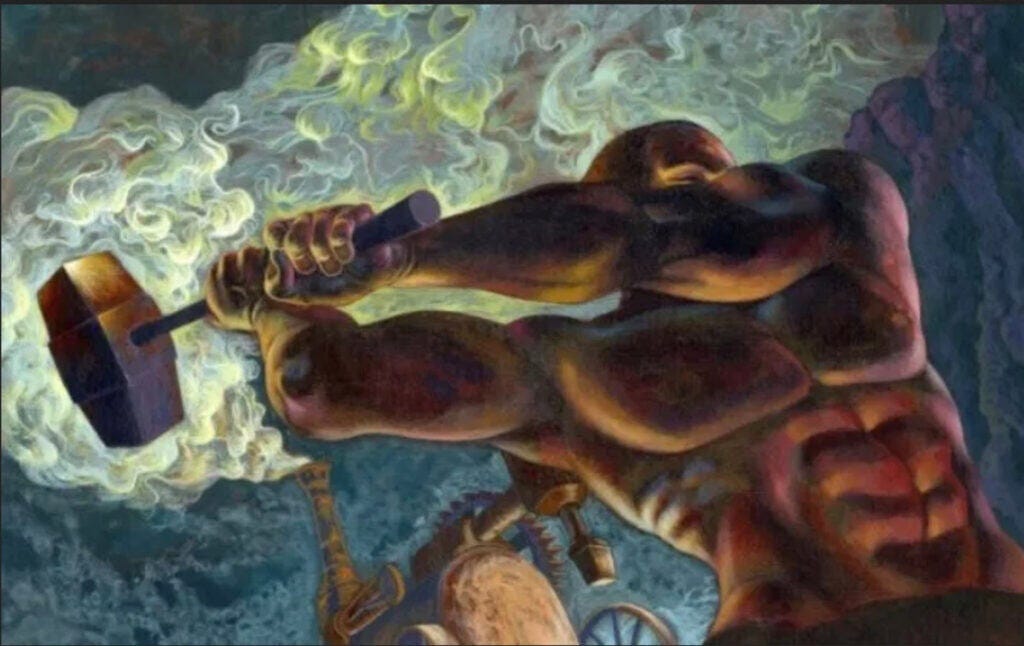
I feel in the same position as John Henry staring down the steam-belching drill at the sootblack peak of the Industrial Revolution.
John Henry was an all-American steel-driving man famed throughout the East as the strongest and fastest of them all. He slammed a man-sized hammer into a steel bit to gouge holes out of hard mountain rock. The holes were plugged with high explosives to blast away any stonework obstructing the railroad’s progress.
In one of the most enduring folk tales of the American republic, Henry competes against the freshly-invented steam-powered drilling machine to ascertain who could dig rock deepest and fastest. An austere duel of machine vs. man.
John Henry won. The work of the machine proved slower and shallower than the work of the man. But Henry’s ferocious effort drove his exhausted body to buckle, collapse, and expire. His blood-fueled force of will defeated the mindless mechanical marvel and preserved the dignity of living toil—at the steep cost of his life.
I am the most intelligent Homo sapien on Earth. (Fret not; you’ll be granted ample chance to contest, mock, and depose this claim.) Like John Henry, Earth’s top steel-driving man, I want to go head-to-synthetic-head in a competitive and public battle of wits versus AI. I want to demonstrate a human brain can out-think a billion dollar cluster of digital data centers drawing more power than metropolitan Cincinnati.
We’ll get to wrangling what such a showdown might look like at the climax of this series. Before we get to that…
This series of articles delves into intelligence. Biological & digital. The forthcoming articles will answer with sharp clarity,
WHAT IS INTELLIGENCE?
And answer quite thoroughly,
If I want to become EXCEPTIONALLY INTELLIGENT with the least effort, what should I do?
(The succinct answer is superlearning…)
We will also discover,
What are the most important differences (if any!) between living biological intelligence and digital artificial intelligence? Can AI perform the same mental acts as human sentience—can AI dream, fear, love, lust, lie, experience, exert freewill, become aware of its own awareness?
We will conclusively answer,
What can AI do right now, What will AI be able to do one day eventually, and What will (digital) AI NEVER be able to do?
And, What corrosive spiritual dangers does an AI-soused future pose to my soul? What might I do about these Self-ablating perils?
Our investigation will illuminate the ultimate nature of learning, knowledge, and intelligence within our physical reality. At the same time, as a natural and inevitable side effect of exploring ultimate learning, ultimate knowledge, and ultimate intelligence this series is also about human spirituality.
About Quintessentialism and god.
If we’re talking superintelligence, if we’re talking cosmic truth, if we’re talking all that can possibly be known by a mind within the Commonality—then extraterrestrials and their intelligence and knowledge and how they learn about us form an ineluctable segment of such colloquy and will ultimately come to dominate the conversation, because any mind serious about attaining individual superintelligence will need to contend with the unearthly minds long abiding upon those marvelous planes.
Welcome! You have begun perusing the Essential Cosmic Guide to Learning and Superlearning for pilgrims of the Quintessence.
.2 WHAT IS INTELLIGENCE, IN BRIEF?
ALL INTELLIGENCE IS PURPOSE.
ALL PURPOSE IS INTELLIGENCE.
This is the most basic truth regarding the physical constitution of intelligence in our cosmos.
Every dynamic of purpose embodies a question and an answer to said question:
Can you achieve your aim within unpredictable chaos?
Every act of purpose is an act of solving (or failing to solve) a mechanical puzzle in material reality, whether that puzzle is instantiated on the atomic scale or the intergalactic.
We’re going to spend plenty of time exploring the cosmic nature of intelligence, duly considering the most prominent academic accounts of intelligence—which are misguided, uninformed, and often worse than useless because they cause harm.
For now, a pithy working definition:
Purposeful activity is intelligent activity.
Intelligent activity is purposeful activity.
Intelligence is a verb, thus. An action.
Thinking, more simply.
The neural dynamics in your brain are a form of thinking activity and thus a form of intelligence. Evolution by natural selection is a form of intelligence and a form of thinking. So is capitalist economics. Economic dynamics mint money out of thin air, dirty oil, and hard mountain rock. Science is a form of intelligence and a form of thinking (solving mysteries for the supermind) as are religion, law, art, and diplomacy (solving conflicts between superminds). The molecular dynamics of an amoeba’s mindwhirl is another form of intelligence and thinking.
Purpose—all purpose—overcomes obstacles in the pursuit of a goal.
This is intelligence. This is the activity of intelligence.
Adapting over time to the reality at hand.
.3 World’s Smartest Sapien, me!
“Genius went out, as a subject for novels, with the Romantics, and the problems of the very intelligent are not felt to be urgent in a populist age like ours. We are more anxious about what will happen to the uneducated and unqualified who will be superannuated by machines and become disaffected.” This is the opening from a book review in New Yorker in 2000, before AI and social media became simmery concerns.
The quotation expresses a typical tribal feeling of otherness: that very smart people can surely use their big brains to fend for themselves, and do not merit sympathetic consideration from the smartless, any more than the problems of billionaires merit sympathy from the moneyless.
This might be true if some members of our race were born with brains fully loaded with knowledge the way some folks are born with fully loaded trust funds. But the most urgent problem concerning the very intelligent is relevant to the populists:
How does a human transition from being a member of the “uneducated and unqualified” tribe to being a member of the “very intelligent” tribe?
This is not at all the same question as:
How does a human transition from being a member of the poor tribe to being a member of the superwealthy tribe?
Perhaps the most defining distinction: firm math limits how many superwealthy people there can be within a population. For one soul to be superwealthy, vast numbers of other souls must be poor. We can’t all be equally superrich together. Economic equality is socialism, whether everyone has five hundred dollars or five billion.
But we can all be superintelligent together.
There are many social, economic, and physical constraints on acquiring wealth, the most inviolable being that rich is defined as being wealthier than most other humans.
Wealth is a relative condition, one that can be usefully and pragmatically quantified with a single number: your net worth.
Individual wealth is inherently relative to the wealth of other humans. In contrast, individual intelligence is relative to the physical architecture of the cosmos—more complex mechanical puzzles (like, say, special relativity) demand more complex intelligence to solve them.
While there are social, economic, and physical constraints on acquiring intelligence (constraints we’ll examine in detail), none are insurmountable. Just because your intelligence is growing and growing does not mechanically compel the intelligence of others to get lower and lower, the way wealth does.
Another way of saying this:
Just because you long with all your heart to be rich does not mean there will necessarily be a viable path for you to become rich. For you to become richer means others must become poorer, and others may resist such a fate. Out of a group of one thousand people, only one could become superwealthy and only if they manage to force the other nine hundred and ninety nine into destitution. However, if you long with all your heart to be very smart, there will be a viable path for you, because for you to become smarter does not depend on others becoming dumber.
We can all be superintelligent together. We can all solve sophisticated problems together.
The most universal and effective path to high intelligence is to learn about learning.
And the best way to learn about something is do it yourself.
Explore it yourself.
Design it yourself.
Build it yourself.
Solve it yourself.
The very best way to learn about learning is to learn about learning yourself.
THE FIRST PREMISE OF SUPERLEARNING: The most efficient way to become superintelligent is to devote your consciousness to superlearning.
The SUPERLEARNING CYCLE
Learn how learning works. Learn how you can learn faster and deeper.
Apply what you’ve learned about learning to learn even more about learning.
Repeat step 2 for as long as you’re conscious.
Learn about learning to become a better learner, then repeat.
Learn about intelligence to become more intelligent, then repeat.
Learn about knowledge to become more knowledgeable, then repeat.
Learn everything you can about learning, intelligence, and knowledge, then apply it to your own learning, intelligence, and knowledge. Do this whenever you find yourself conscious.
This is how I became Earth’s smartest sapien.
.4 The Motivation for Superintelligence
Here’s LeBron James describing what it’s like being LeBron James:
You get lost in your own journey because you’re trying to like, push the limit, push the throttle, see how far you can go. Oh shit, that’s the sky? What’s beyond that? There’s no ceiling. And while you’re on that trajectory, at times, you’re looking down, like: Oh, shit. My family’s down there. You’re trying to say thank you, but you’re like, so fucking high at that point that she don’t even hear you.
Also a pretty good description, as it happens, of what it’s like being me.1
I’ve spent the entirety of my life pushing full-throttle the absolute limit of what a mortal brain can learn and fathom. I climbed higher and higher and higher up into the Empyrean reaches of intelligence and perspective.
Reviewing my own journey to superintelligence is a good way to illuminate the triple mysteries at the heart of this series: knowledge, intelligence, learning. Because I am alleging I got smarter than any vertebrate ambling our orb, let us survey together my slow strange journey to Olympian elevations of intellect. We will learn how a solo sapien surmounted the myriad hindrances and hurdles hampering the path to superintelligence.
The first issue to contend with is motivation, because superintelligence demands a lot:
What motivated me to become more knowledgeable than any Earthling?
I never aimed to become world’s smartest human. That was never the objective. Rather, it befell me as a byproduct of trying to become smart enough to solve a very particular mystery:
Reverse-engineering extraterrestrial technology.
When I was eighteen years old, I encountered offworld intelligence employing unknown technologies to communicate with me in a fashion that was downright miraculous. Impossible. World-breaching. Unfathomable.
I was highly motivated to unriddle how the alien machinery worked. A deep, searing, unappeasable motivation much different than the more familiar human motivations to become, say, Wimbledon champion, Best Supporting Actress, or world’s richest human.
If unriddling eldritch apparatus designed by non-human minds could be achieved without becoming superintelligent, that is the path I would have taken. But as it turned out, fathoming the operation of the intricate interface facilitating communication with intex (intelligent extraterrestrials) required a knowledge of mathematics, physics, mindscience, art, literature, and spirituality that soared above and beyond what any human has yet been able to synthesize within a single brain after seven thousand years of sapiens civilization.
Why was my personal motivation to learn so potent and stout? Because during my first encounter with intex I experienced death and I experienced resurrection. A boggling enigma that violated basic premises of humankind’s collective scholarship and wisdom. Resurrection by the will of nonhuman intelligence ranked as flat impossibility, yet I experienced it.
I experienced it within the same world where I experience you and gravel and oxygen and electromagnetism and our race of mortal souls.
The anomalous incident motivated me to learn, and learn, and learn. It was readily apparent the human race possessed not the wispiest clue regarding how to even frame the mystery of intex contact, let alone solve it.
How could alien technology be modeled? What math would serve to unlock its mysteries? What mechanics? Why might such aliens and such technology exist in the cosmos at all?
And why were they speaking to me?
All fellow members of the sapiens race declared my goal impossible, witless, psychotic. And right off the bat we encounter a chief principle of superlearning:
There is a big difference between learning for a tribe and learning for yourself.
I’ve never met another human who was motivated to become smarter than everyone else. This might feel a surprise until you hear my clarification: I’ve met a great many humans motivated to be perceived as smarter than everyone else.
Who want to be regarded as smartest brain in the room.
This is one reason it wasn’t as difficult as you might imagine to become world’s smartest human. When it comes right down to it, there’s simply not many people motivated to push their intelligence to the limit. Instead, human brains are motivated to get celebrated by their tribe—and even those humans who manage to put aside tribal concerns to pursue their own private aims still find their actions and opinions decisively shaped by tribe.
The tribe declares, we will celebrate individual brains as “intelligent!” if they serve the tribe well. The tribe declares, there’s no reason for an individual brain to maximize its intelligence at the cost of sacrificing other tribal obligations. Instead, spend your time fitting into the tribe and promoting tribal beliefs and activities!
The relationship between tribes and individual intelligence is most manifest in academia. Academia does not incentivize individual brains to learn deeper or faster than others, or solve complicated problems or mysteries.2 Academic incentives encourage brains to publish papers, get citations, secure grants, land promotions, and secure tenure. The incentives are all tribal: financial, social, reputational. Academics pursue money, status, and job security rather than developing the superintelligence needed to solve very tough problems.
The only problems that remain in human science.
Why is the rabbit faster than the fox? Because the fox runs for its dinner while the rabbit runs for its life. The same logic applies to the pursuit of superintelligence.
Academic superstars and all the other brilliant folks widely cited as candidates for “world’s smartest human” are learning for their dinner.
I’m learning for my life.
Whether I could/should/would become superintelligent has always been a matter of life and death for me—a matter of death and resurrection. Because I die, and die, and die, and die again and each time get resurrected through extraterrestrial technology yet nobody else seems to experience this and I absolutely needed to understand why my daily experience was so intense, fearsome, and physics-defying compared to that of other souls.
This is how I became Earth’s smartest sapien.
.5 Other Candidates for World’s Smartest Sapien
My claim does not rest upon raw intellectual potential but empirical intellectual achievement, capped by reverse-engineering extraterrestrial technology and successfully wielding it for my own ends, including death-denial. In the next article, I will narrate in detail how I went about cracking the intex machine, a story of how I used superlearning to attain superintelligence—enough intelligence to decrypt god-like ingenuity.
The point of the story is to clarify the full physical nature of intelligence, and to introduce you to superlearning which eventually became the formal process I adopted to acquire the knowledge and skills needed to operate unearthly technology.
We will review the diverse and cosmic mental challenges I encountered during my journey (such as the problem of mathematizing shared consciousness) and how I solved them—and show how you can learn from my experiences to boost your own intelligence past your evolutionary endowment.
To prepare us for this first-person journey to superintelligence, let’s review the other candidates for World’s Smartest Brain. Below is a list of folks who each enjoy advocates contending THIS mind is the brightest in history!
We’ll consider why society judges these brains as supergenius, then we’ll identify where they fell short. We’ll use this analysis as an introduction to the nature and operation of high human intelligence and how to evaluate it. When I narrate my own superlearning journey to the top, I will frequently refer to these “supergenius” brains as yardsticks.
Let me make plain: I’m not out to diminish or downgrade anyone. I love and admire all the famed brains below and think they’re wonderful and wonderfully intelligent.
Just not superintelligent.
As I ascended towards superintelligence, I studied many of humankind’s celebrated geniuses—including most names on this list—to discover how they lived and thought and made decisions and set goals. Naturally, I wanted to reckon with my own mind and progress—to compare how I was going about learning and modeling and solving to the masters of sapien intelligence. I feel a deep personal connection to all souls below.
I needed to understand them intimately so I could surpass them decisively.
I followed Faulkner:
Let the writer take up surgery or bricklaying if he is interested in technique. There is no mechanical way to get the writing done, no shortcut. The young writer would be a fool to follow a theory. Teach yourself by your own mistakes; people learn only by error. The good artist believes that nobody is good enough to give him advice. He has supreme vanity. No matter how much he admires the old writer, he wants to beat him.
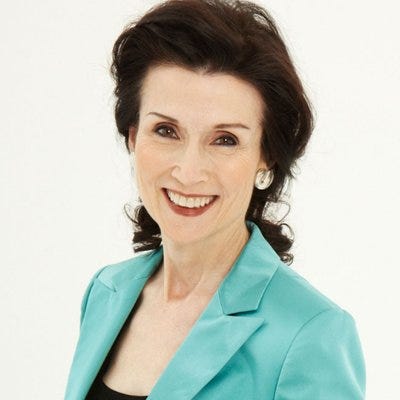
Marilyn vos Savant: High IQ, Low Achievement.
The only soul I’ve encountered the media has widely and explicitly celebrated as “world’s smartest person.” Her claim lies in the fact she scored 228 on an American standardized test of intelligence (the Stanford-Binet) in the 1950s—the highest IQ ever officially recorded according to the Guinness Book of World Records.
Marilyn von Savant compels us to confront the most widespread conviction regarding braininess: intelligence can be accurately and meaningfully quantified with a single integer.
An IQ.
An Intelligent Quotient: a number signifying precisely how smart you are.
A number signifying precisely how much smarter or dumber you are than everybody else.
I say IQ is bogus, bad math, and worse than useless. (We’ll get into why over the course of this series, drawing from my critique of standardized tests in my books The End of Average and Dark Horse.)
The most prominent and popular academic conception of intelligence is a bell curve, a deeply-ingrained notion of intellectual savvy dating to the 1880s. In this antiquated view, most humans are clustered around “average intelligence” while a few outliers are much dumber or smarter than the norm.
According to bell curve theory, intelligence is but a magnitude. A one-dimensional axis. A scalar ranging from low to high.
A net worth.
IQ sets perfectly average intelligence at 100, genius at 145 (three standard deviations above average) and moron at 55 (three standard deviations below average). According to the bogus math of IQ, Marilyn von Savant is more than eight standard deviations smarter than average. Accordingly, the odds of finding someone that smart by picking humans at random would be 1 in 200 billion billion.
1 in 200 quintillion.
I’m superintelligent but I sure ain’t no 1 in 200 quintillion.
The Guinness Book of World Records stopped recording “smartest person in the world” in the late 1980s because of growing doubts concerning IQ as a legitimate measure of intelligence. Marilyn von Savant was the last person to hold the Guinness title of highest IQ, which is what led the media to acclaim her as “world’s smartest person.”
My first empirical criteria for high intelligence:
You must decisively solve a public mystery widely regarded as important, which many capable brains attempted to solve and failed.
You must prove the might of your intelligence in the real world by unraveling a civilization-baffling conundrum.3
So what did the amusingly-named Savant do with her 1-in-200-quintillion brain?
According to Wikipedia and ChatGPT, “She’s especially well-known for explaining the Monty Hall Problem.” The Monty Hall Problem is a modest and not especially relevant math puzzle. Savant did not solve the puzzle. She merely explained the solution to the public.
She’s spent her life writing a column for Parade magazine. There’s no record of her making any significant discovery or intellectual achievement.
I don’t consider Marilyn von Savant a serious candidate for supergenius, though she does illustrate how most human beings—most human tribes—instinctively think about intelligence.
As a magnitude ranging from extremely dumb to extremely brilliant.
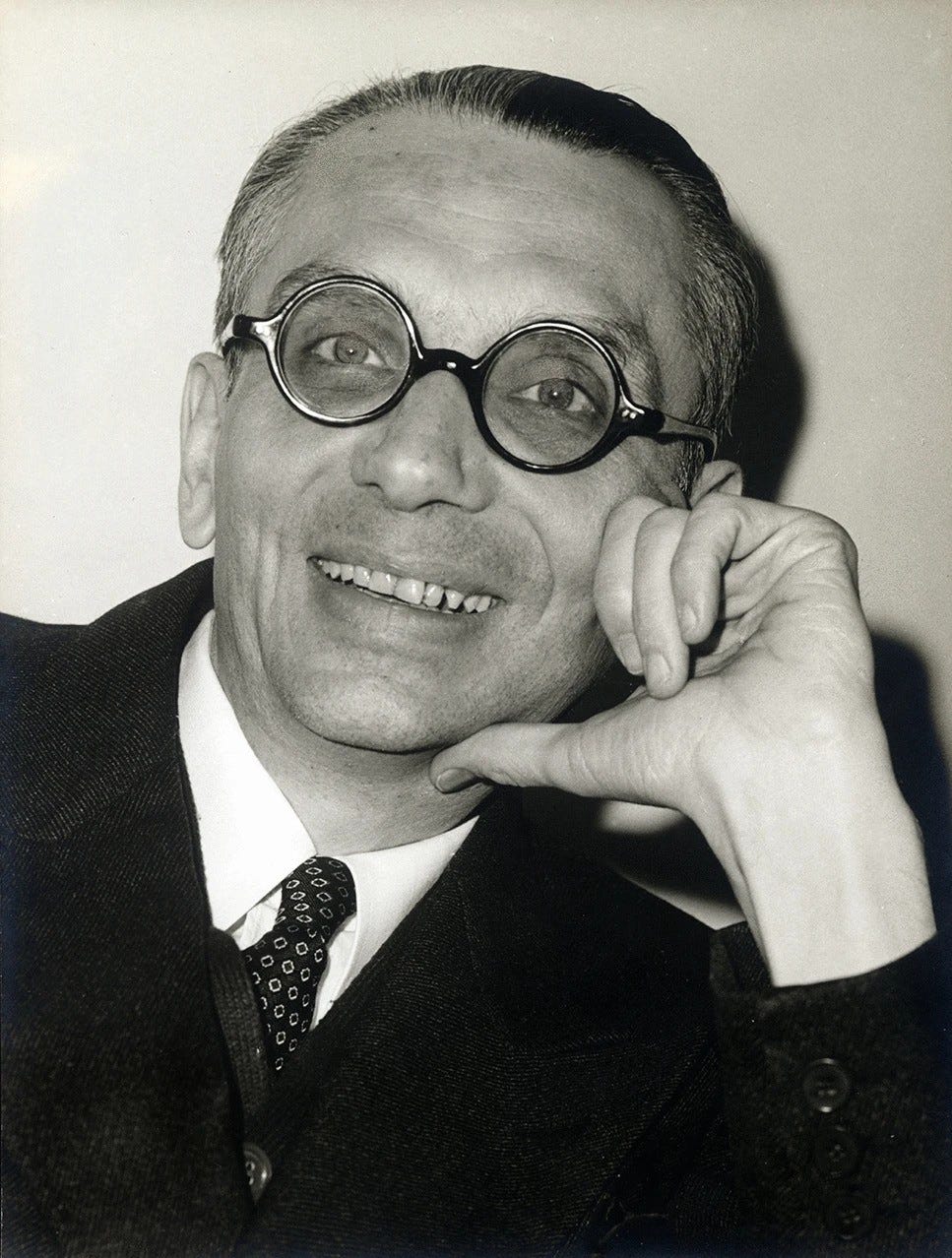
Kurt Gödel: One-Hit Superwonder
I began with Marilyn von Sant because she is the only brain who qualified for this list because of a formal quantification of intelligence. The other brains were chosen because each enjoys a following who believes they are smartest ever.
Three reasons explain why I selected Kurt Gödel next. First, he is widely considered one of the smartest mathematicians of the twentieth century (some say the smartest). Second, his Incompleteness Theorem is widely considered the greatest mathematical proof in history. (I won’t disagree.) And third, I don’t think Gödel’s a candidate for sharpest human, but we can use him to illuminate those who are.
Kurt Gödel permits us to unveil a second criteria for high intelligence:
The mastery of multiple branches of knowledge, including both science and art, and the production of work that reflects a synthesis across disciplines.
Gödel’s Incompleteness Theorem certainly qualifies as a major intellectual breakthrough. It demonstrated deep truths about reality that lay outside mathematics. Gödel showed it’s possible to know something to be true for certain, even if we cannot prove it is true. The Incompleteness Theorem also revealed something deep and relevant about the relationship between mathematics and Mind: that any idea a human can conceive can be characterized in the abstract language of mathematics. Gödel’s unprecedented style of proof also revealed a deep connection between analogy and logic, the two primary modes of human intelligence.4
The Incompleteness Theorem is even more impressive because it proved the exact opposite of what every leading mathematician in the world expected to find. They universally believed that mathematics was both consistent (no contradictions hiding in the math) and complete (every true math statement can be proven true). Contrary to universal human conviction, Gödel proved instead that if a mathematical system is consistent, it’s not complete; if it’s complete, it’s not consistent.
Gödel’s Incompleteness Theorem (along with several other highly original foundational discoveries in math and logic) mark him as one of the greatest mathematicians in history.
But Gödel’s intelligence was limited to mathematics.
He was notoriously awful at anything involving writing, teaching, talking, or basic socializing. His notions of medicine, mindscience, and culture were amateurish, idiosyncratic, and occasionally delusional. He was never able to communicate the value of his work to laypeople, or even to most academics.
Superintelligence demands learning a great many things extremely well, including an ability to explain your breakthrough work to grandmothers and children.
Otherwise, you don’t really understand what you think you understand. (Gödel believed he proved the existence of a mystic Platonic realm, which he decidedly did not.)
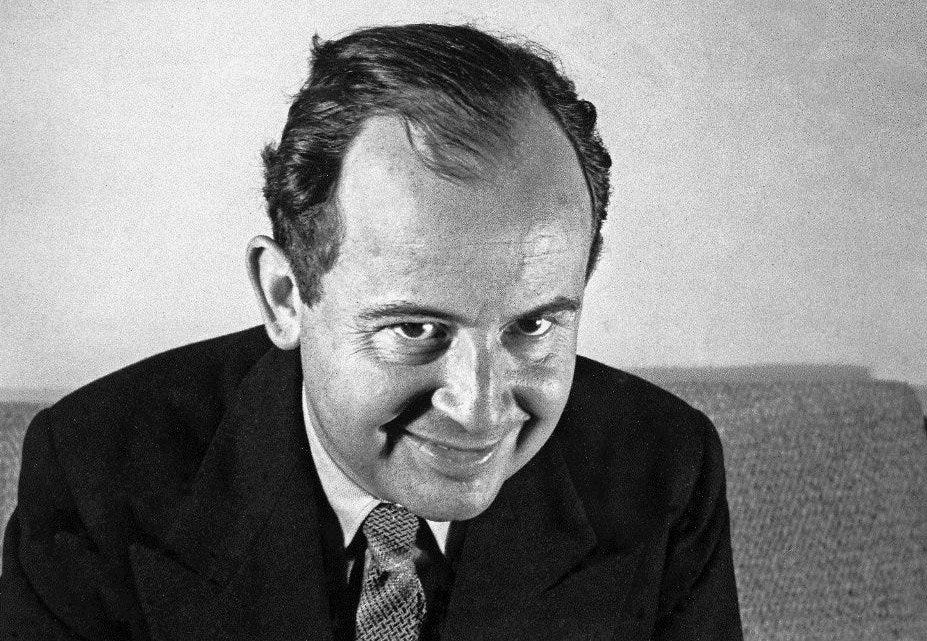
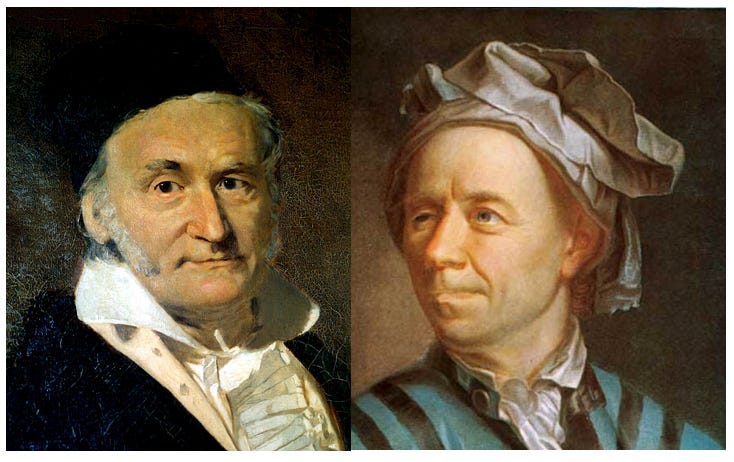
John Von Neumann & Gauss/Euler: Mathematical Supergeniuses Broader than Gödel, but Not Broad Enough
John Von Neumann was an exceptionally intelligent human being who excelled in math, physics, and engineering. Virtually every smart person who encountered him came away suggesting his intelligence was inhuman. He’s certainly a candidate for greatest mathematician in history, as his vast and diverse mathematical discoveries are foundational, far-reaching, sizzlingly original, and perfectly worked out. He made major contributions in quantum mechanics, computation, nuclear warfare, game theory, hydrodynamics, aeronautical engineering, and set theory.
The comparative diversity, speed, and originality of his contributions ranks him as one of the greatest mathematical minds of Earth. Two other mathematicians who can make similar claims are Carl Gauss and Leonhard Euler. Gauss’s range of discoveries rivals or possibly exceeds von Neumann’s, as Gauss developed deep foundations for many branches of modern mathematics. Leonhard Euler was another extraordinarily prolific mathematician who also developed foundations for many branches of modern math, emphasizing unity and connectivity among the branches.
Though Gauss and Euler enjoyed a significantly broader impact on the field of mathematics than Gödel, the older pair did not learn disciplines outside of math or make meaningful contributions outside of math. (Their math was relevant to physical science, but did not arise from doing science.)
The fact that Gödel, von Neumann, Gauss, and Euler appear so frequently on “smartest brains ever” lists underscores a pervasive tendency among humans—both educated and uneducated—to view doing math at all as obvious evidence of intelligence, while doing great math as obvious evidence of supergenius.
Most people find math a difficult subject in school, but I think the real reason folks are prone to anointing great mathematicians as the smartest humans isn’t because the math itself is hard—it’s because talking about math is hard.
In truth, there’s not much difference between elite performance in any human field and elite performance in mathematics. LeBron James’ basketball intelligence certainly places him at the same elevated level as von Neumann, for instance. They are both demonstrably higher achieving than their most competitive peers. Historically higher achieving, as shown in this graphic comparing the playoff performance of top basketball players:
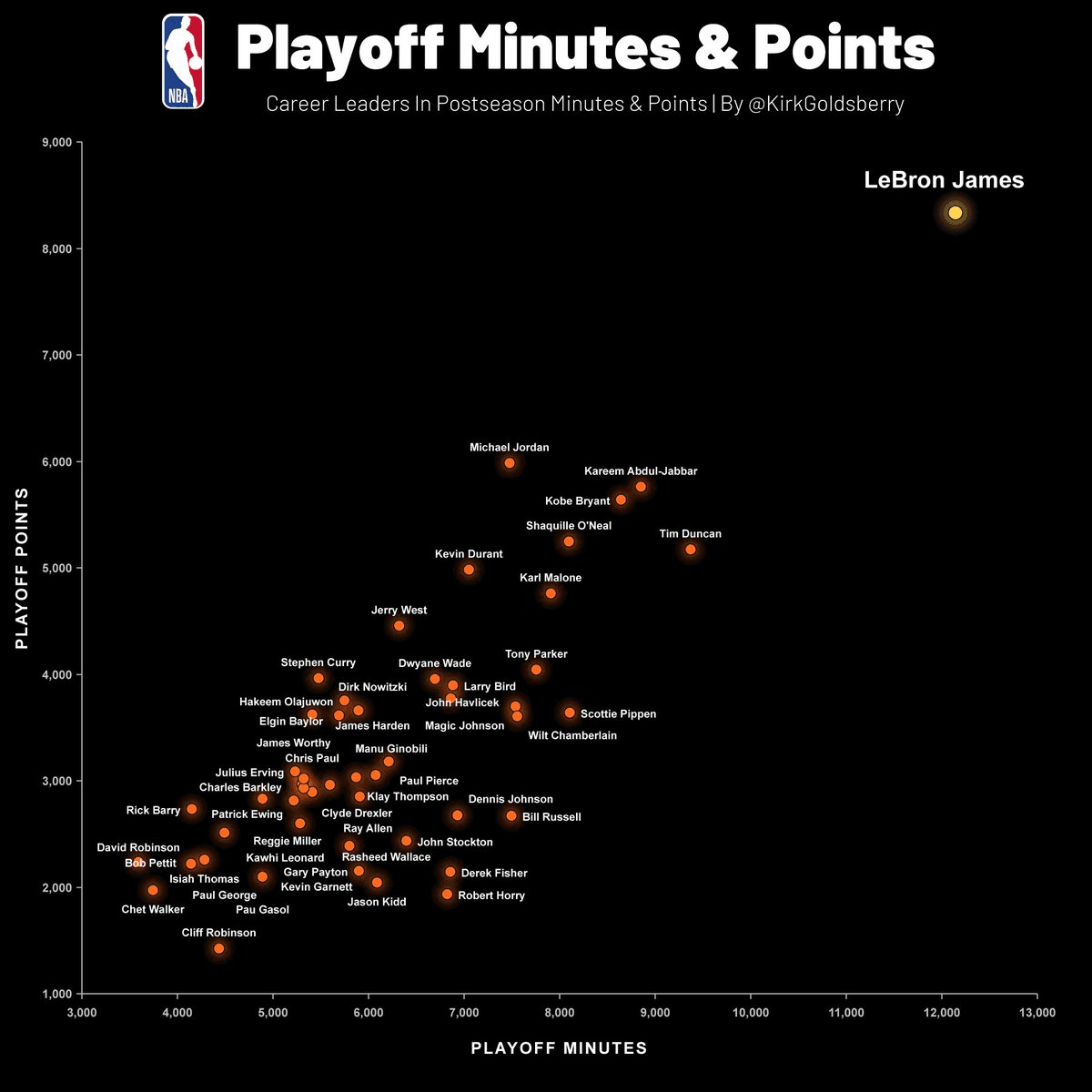
Why doesn’t anybody cite LeBron James as world’s smartest human, when his athletic intelligence soars above his peers like von Neumann’s mathematical intelligence? Especially considering there are enormous cultural and financial incentives for becoming a basketball star compared to far less intense incentives for becoming a math star, which suggests it’s harder to develop James’ level of intelligence than von Neumann’s?
I think it’s because we can all see, talk about, and understand basketball, which makes it easier to imagine that maybe we could be that good. We can all imagine what it would be like to dunk on someone or make a buzzer-beater three. It’s much more difficult to visualize oneself proving the Incompleteness Theorem, especially if one has no idea what the Theorem is or how to talk about it or what it means to prove something mathematically.
I contend there’s no reason to place mathematical intelligence on a higher pedestal than athletic intelligence. Developing high intelligence—exceptional problem-solving adaptation—in any field is difficult.
It’s even more difficult to achieve high intelligence across multiple fields.
von Neumann should be ranked higher than Gödel in any formal comparison of intelligence,5 because von Neumann not only solved a greater diversity of mathematical problems, he also branched out into other fields. Though his thinking remained predominantly mathematical, he applied unprecedented kinds of mathematical thinking to computers, nuclear weapon design, and war games—such as the best time to launch a nuclear strike.
He also mastered engineering—and highly original engineering: the basic design of the modern computer and a crucial yet challenging component of the plutonium bomb.
Yet von Neumann’s learning did not escape the realm of STEM. He was not a good writer, he was not good at explaining his work to lay audiences, he did not make any advancements involving mindscience6, he did not create any artistic or poetic works.
Nor did he tackle the ultimate nature of the cosmos or human experience.
My third criteria for high intelligence—and an essential criterium for superintelligence:
Engagement with the most profound mysteries of our reality—consciousness, death, extraterrestrial communication, god, the creation and termination of reality—leading to original solutions illuminating ultimate mysteries of existence.
We now have our superintelligence criteria:
A brain must solve at least one important yet intractable puzzle; the more the mightier.
Mastery of MULTIPLE branches of knowledge which must include at least one branch of STEM and one branch of art/literature, and the production of work that reflects synthesis across disciplines.
Cosmic achievement drawing upon multiple branches of knowledge and the solution to at least one important yet intractable puzzle—achievement such as communication with extraterrestrial intelligence, locating and wielding extraterrestrial technology, teleportation through space and time, death-denial, etc.
von Neumann did not crack any cosmic mysteries concerning the ultimate nature of reality.
Though Gödel attempted to apply serious mathematics to the search for god, he only did so in a strictly formalized mathematical fashion, and was unable to draw upon other lines of research, theory, or modeling because of his exceedingly narrow background.
You can’t reach god through math alone.
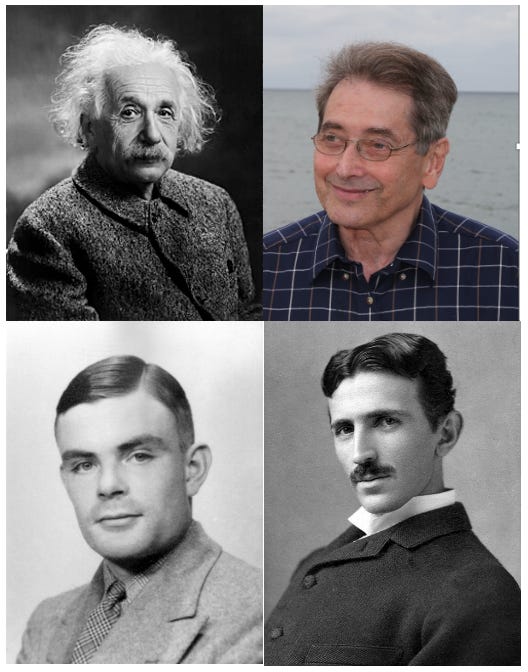
Albert Einstein, Stephen Grossberg, Alan Turing, Nicola Tesla: Geniuses Who Discovered and Pried Open Doors to New Cosmic Worlds
Now we get to our first real candidates for World’s Smartest Brain.
Each of these mental wizards discovered and worked out a whole new realm of cosmic knowledge. Each turned convention and orthodoxy on its head, revealing the universe itself operates different than humans ever imagined.
Einstein generated many cosmic revelations: energy can be converted into mass, and mass to energy. Time is not absolute, upending Newton. Mass shapes space, and space shapes mass. Light behaves like particles. Though Einstein’s knowledge was limited to science and math, he exercised his intelligence across the full range of aimless Nature and single-handedly reshaped the physical sciences to a degree that can only be compared to Isaac Newton himself. But Einstein’s lack of intellectual breadth and failure to achieve a truly cosmic attainment prevents him from entering the finalists’ circle for World’s Smartest Human.
Grossberg single-handedly pioneered most of contemporary mindscience and utterly reshaped its modern form. He was the single most influential pioneer in machine learning, AI, neural modeling, vision, memory, motor control, language, freewill, and consciousness. He worked out the mathematics characterizing most neural dynamics and mental functions in the human brain. (He needed to invent mental mathematics from scratch, like Newton did calculus for mechanical mathematics.) Grossberg achieved all this (the equivalent of Einstein on the mindscience side, though a much more impressive achievement because the math and mindscience is more complex than what Einstein dealt with) even though Grossberg was ignored or rejected by academic mindscience for most of his luminous career.7
Steve is the only name on this list I’ve known personally, and known quite well. His daily braininess is astonishing and unmatched in living minds. I find him self-evidently more intelligent than anybody I’ve ever met, and I’ve known and collaborated with hordes of high-achieving and celebrated academics. In fact, I frequently get introduced to folks presented as “smartest person that X has ever met” yet none came close to matching Grossberg’s intellectual depth and breadth and success.8
Steve achieved his incredible mastery of mindscience and the mathematization of consciousness by unifying many branches of knowledge, including the visual arts, music, psychiatry, neuroscience, evolution, physiology, machine learning, AI, discrete mathematics, dynamics systems, the dynamics of purpose, game theory, sociology, and physics. He is also very concerned with god and the meaning of existence, though in the end he was not able to make the necessary leap to bridge the knowledge gap and attain cosmic achievement.
Alan Turing single-handedly invented the modern computer and modern computational theory from scratch. He invented an entirely new discrete mathematics, one that eluded Kurt Gödel. And he famously cracked the uncrackable Enigma machine through scathingly original electromechanical engineering. He also introduced mathematics into biology in highly original ways. His genius ranged across mathematics, physics, biology, cryptography, and engineering—disparate fields Turing synthesized and unified in novel fashion. But Turing didn’t concern himself with the cosmic, and didn’t branch out into non-STEM fields.
Nicola Tesla was another strikingly original thinker who developed much of the framework for modern electrical and wireless systems. His genius ranged across science, math, and engineering. He invented the AC electrical system which powers the modern world. He also pioneered wireless and radio systems before the more famous Marconi radio. His visionary range of world-changing ideas and implementations—electrical power systems, radio-controlled vehicles, a global wireless system, wireless power transmission—changed the face of human civilization.
But, like Turing, Tesla never left STEM and never tackled the cosmic.
Einstein, Grossberg, Turing, and Tesla are undeniable geniuses, some of the best brains humankind has produced. Each made impressive high-impact discoveries and achievements drawing upon a broad range of human knowledge. Yet, as expansive as their perspectives were, they all remained locked within the intellectual realm of science, math, and engineering (except Grossberg, who I deem smartest of the four due to his Einstein-eclipsing breadth).
We are beginning to detect what might seem a natural limitation for human learning and knowledge. Even among these megastars of the mind, a mortal life only seems long enough to allow for the mastery of a single field, even if that field is defined broadly (math! physical science! computers! literature!)
Individuals who made breakthrough achievements across multiple unrelated fields are vanishingly rare. Individuals who synthesized interdisciplinary conceptions of reality into a unifying vision of the soul’s relationship to the cosmos are rarer still, and perhaps we can name them all.
My contenders for Smartest Person Ever:
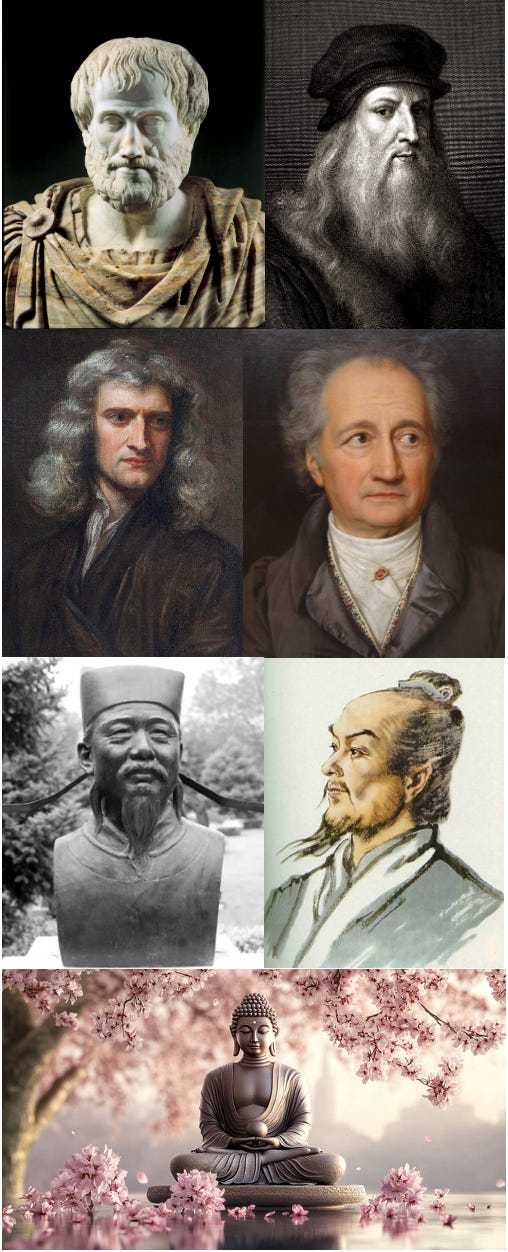
Aristotle, Leonardo da Vinci, Isaac Newton, Johann Wolfgang von Goethe, Shen Kuo, Zhang Heng, Buddha: Superlearner Candidates for Smartest Brain
Each name on this shortlist mastered several disparate fields, and each bridged science and art. Each used all of their brain and broad tribal knowledge to crack the deepest mysteries of Nature. I set one name above all others because he alone used all of individual consciousness and all of collective consciousness to crack the ultimate mystery of our existence, blazing the way for human superintelligence.
We kick things off with Aristotle. Famed as a foundational philosopher of ancient Greece, his intellectual discoveries and ideas strongly influenced Europe for 1,500 years. What make him a candidate for supremacy is his intellectual synthesis of almost every field of human inquiry: physics, biology, psychology, poetry, politics, rhetoric, logic, ethics, motion, causality, time. Plus he was deeply concerned with unriddling the ultimate nature of mortal existence which he tackled using the full breadth of his learning—his superlearning, for Aristotle is one of the few sapiens in history who engaged in a full-spectrum approach to self-education.
Next up is a remarkable man widely ordained in the West as “smartest human ever”: Leonardo da Vinci. And he does make an exceptionally strong case, as nobody else on this list integrated a complete mastery of science and art so seamlessly and productively as Leonardo. He painted the most influential, most valuable, and most recognized paintings in human history: The Last Supper, Salvator Mundi, and the most famous painting of all, the Mona Lisa. He invented a variety of naturalistic and observational painting techniques that became widely adopted and emulated. He intensely studied anatomy and biology, and drew detailed, beautiful, and accurate drawings of muscles, bones, hearts, and brains.
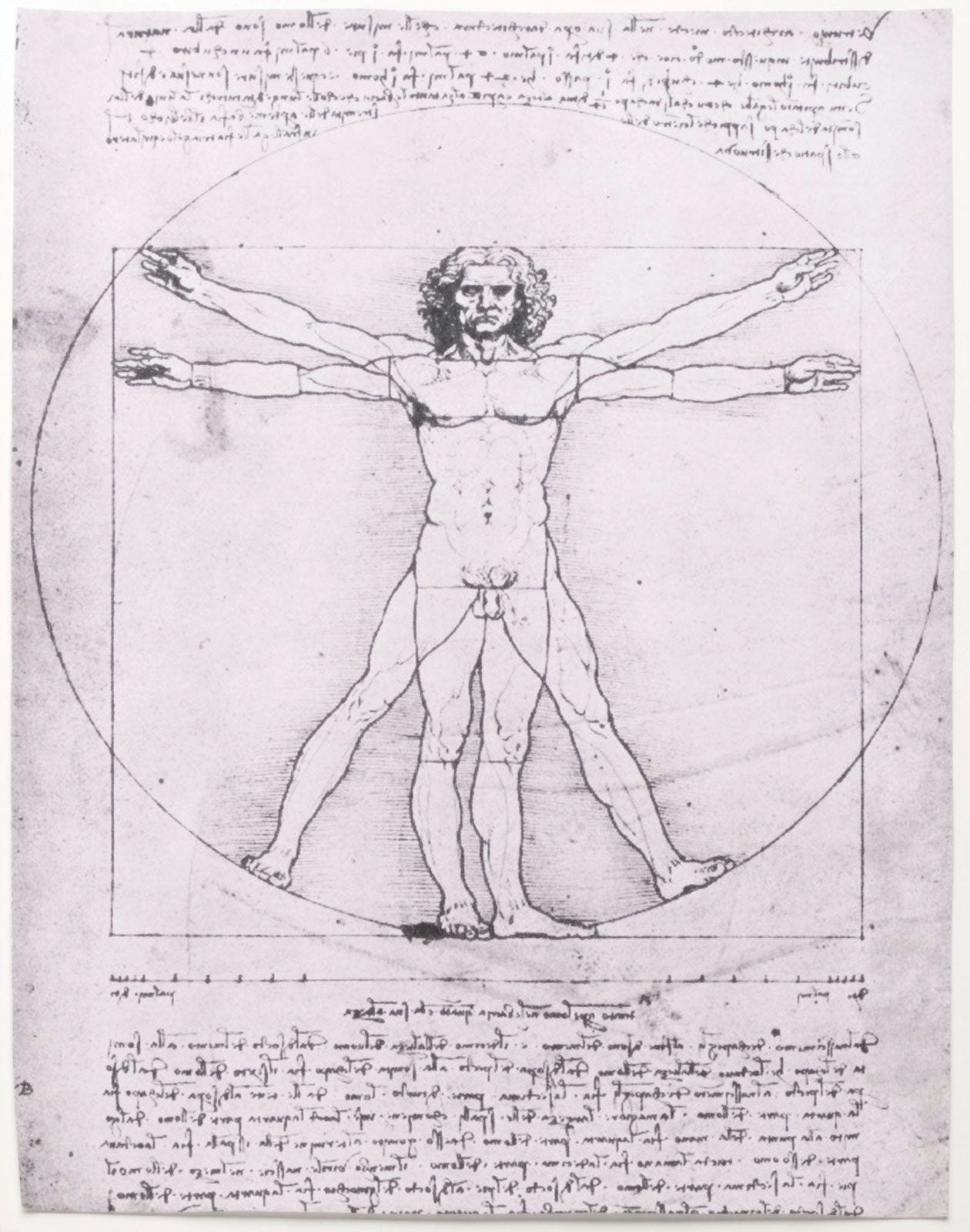
His world-famous Vetruvian Man demonstrates his superlearning: his drawing unifies his detailed scientific understanding of the human body, his skill as an illustrator, his mathematical appreciation of geometry, proportion, and movement, and his deep interest in cosmic order, as the drawing embodies da Vinci’s conviction that humankind and the human corpus are designed to fit snugly within a sublime cosmic structure.
He designed a spectacular variety of engineering marvels, synthesizing a remarkably creative and ingenious approach to mechanics with an elevated sense of aesthetics. Like Steve Jobs’s Apple devices, da Vinci’s inventions were highly functional and aesthetically elegant: helicopters, tanks, bridges, pumps, boats, wheelbarrows, canal locks, irrigation machines, automatons, parachutes, weather devices, optics, and even the design of an ideal city. He brought scientific observation and experiment to the study of geology, hydraulics, optics, and physiology. He engineered real-world civil projects such as flood control systems and canals. Though da Vinci lived during a peak of Christian influence over Europeans, he ignored Christ and Scripture in favor of a cosmology that held Nature follows consistent, impersonal laws.
Personally, I’d rank da Vinci as second smartest human in history, though I sure do love the next brain on our list. . .
I celebrate Isaac Newton frequently here on the Dark Gift. He single-handedly invented modern science and single-handedly worked out the most important mathematics in science, calculus. Though Aristotle’s heroic attempt at unifying diverse domains of knowledge ultimately failed (atoms are not composed of fire, earth, water, and air), Newton secured the first true scientific unification with his breathtakingly original Theory of Universal Gravitation which united the physics of the heavens with the physics of the Earth, establishing a mechanical unity of all reality that enabled modern science.
And Newton was extremely motivated to crack and wield extraterrestrial intelligence, exhibiting the same relentless passion as myself. He was not trying to establish a new form of natural philosophy or free humankind from religion and god. No, Newton was trying to directly connect with god itself—and in fact Newton was convinced he successfully deciphered god’s secret plans for humankind. There was no division between science and spirituality for Newton; their unity within his soul fueled his discovery of unities within physical reality.
Johann Wolfgang von Goethe did not make nearly the same impact in shaping science and math as Newton, but where Goethe differentiates himself is in his remarkable mastery of highly disparate fields of human achievement. Goethe was strong, though not exceptional, in science. He made serious contributions (all eventually superseded by better science) in color theory, morphology, and anatomy. But he balanced these world-class scientific contributions with enduring works of creative art.
His novels The Sorrows of Young Werther and Faust have lounged on college reading lists throughout the world for the past century and a half, and Faust remains profoundly influential across Western culture and arts. His novel Wilhelm Meister’s Apprentice invented the influential literary genre of the bildingsroman, or “coming-of-age” novel. He also wrote poetry that remains culturally iconic in Germany and is still studied in Western schools.
He was deeply concerned with god and ultimate reality, but instead of adopting or developing views from organized religion or ancient philosophy, he pursued his own vision of physical reality as ultimately experiential. He believed Nature was god and that by directly experiencing Nature we were experiencing god. Goethe brought an aesthetic and poetic understanding of cosmic intelligence into the discussion which gave rise to Romanticism in the arts and literature, Idealism in philosophy, and holism and phenomenology in science. (Goethe is more of a precursor to Grossberg than Newton.) Goethe’s views reflected a deep synthesis of his masterful understanding of science, Nature, art, and poetry.
Though Goethe did not make any breakthroughs at the cosmic level, and da Vinci is a little more impressive overall.
I confess I do not know the next two brains nearly as well as the rest on this list, and I regret this. I’ve spent meaningful time with all but two of the names on this list, and extensive time with most, but I only know Shen Kuo and Zhang Heng from afar because of their non-Western heritage and my lack of familiarity with Chinese languages. Both men were Chinese superlearners who mastered, integrated, and applied knowledge from a multiplicity of domains.
Shen Kuo lived in the mid-1000s. Long before Western science, and yet he made many foundational scientific discoveries that would not be attained in the West for centuries. In geology, he discovered fossils from which he concluded that landforms change over time and that there was a deep history to Earth. He made major contributions to astronomy, particularly astronomical observation. He formalized (though did not invent) the use of a magnetic compass for navigation. He developed applied mathematics and engineering for hydraulics and surveying, including flood-control and canal building. He synthesized his mastery of multiple disciplines into a philosophy of life within a vast literary collection (Dream Pool Essays) which reads like a text of scientific reasoning with its emphasis on observation, questioning authority, and attention to natural causes.
But Shen Kuo did not strive for nor attain a cosmic breakthrough.
Zhang Heng lived a millenium before Shen Kuo, in the early 100s. Like Kuo, Heng’s contributions were diverse and brilliant. He designed history’s first seisometer that could detect and indicate the direction of earthquakes. Like da Vinci, Heng approached invention with aesthetic flair: his seisometer incorporated a dragon that dropped a ball in the mouth of a toad indicating which direction the earthquake lay. The fact that he designed such an instrument indicates he recognized that natural disasters had natural rather than divine causes. He developed (geocentric) models of astronomical orbits and built a mechanical model of celestial motion. He argued that stars were “infinitely distant” rather than holes in the sky or close-by orbs. He made contributions in cartography and geology. His poetry was skilled and admired by his contemporaries (though was not a major influence on the subsequent evolution of Chinese poetry). He mastered gears, hydraulics, and mechanical motion.
Heng was deeply interested in cosmic structure and evolution, which he viewed as complex natural patterns—an unimaginably vast yet mathematically ordered system. His view of ultimate reality was informed by his superlearning synthesis.
All six of these men are extremely smart and earned their place on this list. But I’d anoint Buddha as most intelligent human to live before the twenty-first century.
Buddha set himself the task of solving one of the most intractable and all-encompassing cosmic mysteries to befuddle the human race: the problem of suffering.
What was the cause of suffering? And how could a living soul eliminate suffering?
Such were the challenges Buddha set for himself. Challenges, it’s safe to say, that every mortal confronts and considers and surrenders to.
To solve the profound mystery of suffering required a profound understanding of both the inner world of the mind—the experiencer of suffering—and the outer world of the cosmos—the apparent source of suffering.
To solve this mystery, Buddha followed a rigorous empirical approach rejecting faith, superstition, and dogma. He began to seek out instructors who could teach him lessons about the mind and reality that would aid him on his intellectual quest. He was quickly regarded as a mental prodigy, rapidly mastering the lessons of his teachers before moving on to a new instructor with more to teach.
Buddha’s penetration of the mysteries of thought and consciousness were unmatched until Stephen Grossberg in the twentieth century. Buddha shames the early Western scientists who turned away from mindscience in the 1700s as too difficult to tackle in favor of the easy reductionism of aimless physics. Buddha dove into the complexity and chaos of consciousness that Europeans and Americans were too fearful or incompetent to investigate.
And Buddha emerged with a lucid understanding of the construction of the cosmos and the ultimate nature of human experience. He offered an evidence-based prescription for reducing suffering:
Eliminate craving and attachement. Let go of the illusion of the Self. Embrace mindfulness, ethics, and perspective.
Buddha achieved a cosmic attainment: he single-handedly worked out the empirical source of human suffering and an efficacious pragmatic method for reducing or eliminating suffering rooted upon a profound understanding and unification of consciousness and cosmos. And he did without any recourse whatsoever to Western science, mathematics, or philosophy.
I’m dazzled by Leonardo da Vinci’s seamless unification of science and art, wildly impressed by John von Neumann’s mathematical achievements, and venerate Isaac Newton’s spiritual science.
But the only brain on this list I view as a true peer is Buddha, because he is the only one who set out to crack a cosmic mystery from first principles—what is the Self and why does our Self experience suffering?—and after a lifetime of intense and deliberate and bracingly original intellectual effort, succeeded. He succeeded by contradicting and upending many widely held tribal beliefs about the ultimate nature of mind and reality.
I did not surpass Buddha until my fifties, when I was finally able to frame the Buddha’s discoveries within an even broader and more detailed understanding of consciousness and cosmos.
Let me show you how I did it.
In fact, as I will relate in detail in future articles in this series, the precise feelings that LeBron James expressed about his family—feelings I felt myself regarding my family—led me into a major reconfiguration of my daily and yearly life that unlocked the highest reaches of superintelligence for me. A major reconfiguration of my family.
We will spend time on the American educational system in this series. While working professors are not incentivized to learn faster or deeper, students coming up in academia are so incentivized.
My definition of intelligence is based upon my experiences solving many cosmic mysteries. Now that I’ve solved things no other human has come close to solving, I can look back and see what made such achievement possible. My definition is based upon what was necessary to reverse engineer the Maze of Souls, decode Five’s communication language, and jump past death while maintaining continuity of consciousness.
Godel’s Incompleteness Theorem also supplied me with a crucial mathematical insight regarding world-jumping.
The only reason that we even know about Gödel is because of Von Neumann. When Gödel first presented his Earth-shaking Incompleteness Theorem at an academic conference, his dull and monotonic presentation baffled everyone. Nobody in attendance understood the importance of Gödel’s theorem and none gave Gödel a second thought.
Except for von Neumann. He immediately recognized the momentous nature of the Incompleteness Theorem—and he possessed enough social talent to promulgate the discovery throughout academia. It’s one of the craziest coincidences in the history of math: if von Neumann hadn’t decided to sit in an obscure Austrian logician’s opaque lecture, the world may never have known about Gödel’s supreme achievement.
Some would categorize game theory as mindscience. I’d say that mindscience makes use of game theory the same way we mindscientists make use of physiology to understand blood flow in the brain, though blood flow in the brain is not mindscience.
He wasn’t entirely ignored, of course. Plenty of folks simply stole pieces of his vast work and passed it off as their own. There are crowds of academic thiefs who pilfered Grossberg, the most notorious and egregious is of course John Hopfield, who received a Nobel for work that Grossberg originally did, but which Hopfield passed off as his own.
It’s instructive to compare Stephen Grossberg to Eric Kandel, who won the Nobel Prize for his psychiatric work and is widely regarded as one of the greatest mindscientists in history.
Beginning in the 1960s, Kandel made a big and well-known bet: he believed that in order to understand mental illness like schizophrenia and depression, the very best route was to first understand very small and local neural structures and actions, and then build up to the big stuff. This is the method of reductionism and Kandel explicitly adopted this from physics, like most mindscientists suffering from physics envy.
So Kandel began studying the gill withdrawal reflex in sea slugs.
Earlier, in the 1950s, Grossberg also made a big but not-as-well-known bet: he believed that in order to understand everything about the brain—including mental illness—the very best route was to work out the math for everything in the brain by spreading out in every direction at once. This was a holistic methodology and conception much different than what is found in physics, or Kandel’s approach.
So Steve began studying everything about the brain.
Sixty-five years later, where did Kandel end up? Yeah, he won the Nobel all right, for that work he did on the sea slug. Did it reveal anything useful about mental illness? Anything?
Nah. We can’t point to anything in psychiatry, neuroscience, or machine learning that grew out of Kandel’s work. It didn’t cohere or lead to anything interesting or important.
And Steve?
He has well-proven mathematical models covering every major neural structure and neural dynamic in the brain, including models of attention, memory, planning, and motor control that reveal the underlying causes of many previously intractable mental illnesses. Almost every major machine learning or AI model can be traced to some portion of Steve’s work.
And Steve cracked consciousness itself.
Kandel didn’t crack anything, except maybe the siphon of the sea slug.